
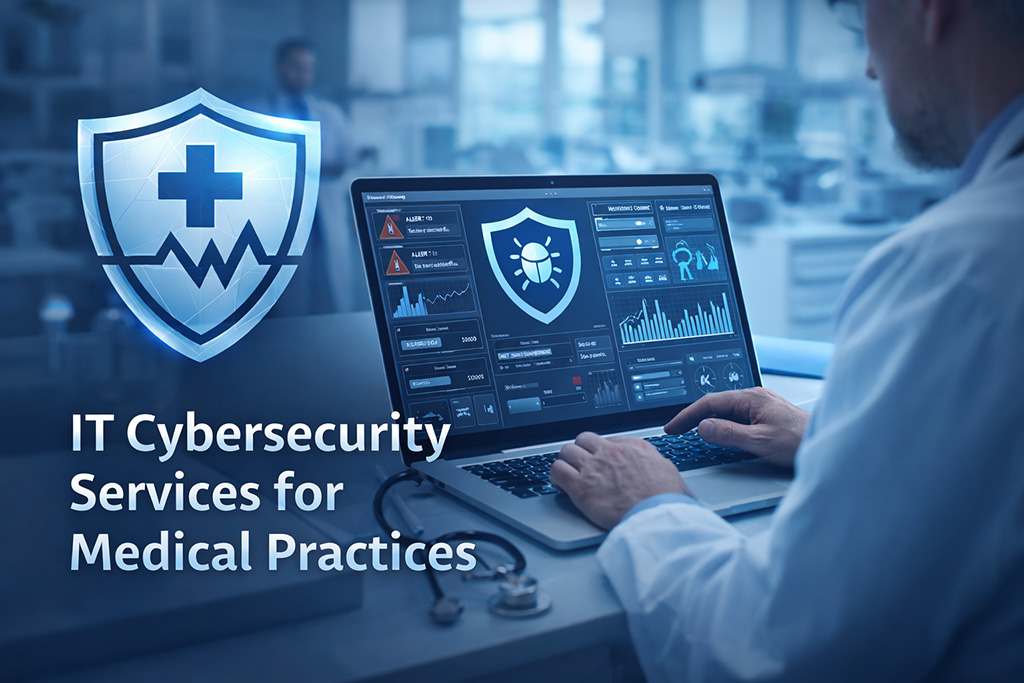
For executive directors, practice managers, and physician owners across Washington, DC, Maryland, and Virginia (DMV), technology is the silent partner in every patient encounter. From electronic medical records (EMR/EHR) and digital imaging to telehealth and insurance verification portals, modern clinical workflows depend entirely on a stable, secure digital infrastructure.
However, as specialty medical practices digitize to improve patient outcomes, they also become prime targets for sophisticated cyber threats and operational disruptions. In healthcare, a technology failure is never merely an inconvenience: it directly impacts patient care, regulatory standing, and organizational reputation.
At Elite IT, we believe that safeguarding a medical practice requires more than reactive troubleshooting or standard off-the-shelf software. It requires a disciplined, structured approach built specifically for the realities of modern healthcare. That is why we developed the Medical Practice Protection Framework™: a comprehensive operational model designed to eliminate technical blind spots, secure patient data, and maintain clinical continuity.
The High Stakes of Healthcare IT in the DMV
Specialty medical practices: whether cardiology groups, orthopedic centers, pediatric clinics, or multi-specialty practices: operate in a uniquely demanding regulatory and threat landscape. Patient health information (PHI) is exceptionally valuable on the dark web, making medical offices frequent targets for ransomware and data exfiltration.
At the same time, regulatory bodies enforce strict compliance standards around privacy, data access, and system integrity. When an unexpected outage or security incident occurs, the consequences ripple across the entire organization:
- Clinical Disruption: Physicians cannot access patient histories, lab results, or imaging files, leading to delayed appointments and rescheduled procedures.
- Financial Exposure: Extended downtime results in immediate revenue loss, while recovery efforts and potential compliance penalties carry staggering costs.
- Reputational Damage: Trust is the cornerstone of patient relationships. A public security breach can erode years of community standing in a matter of hours.
To navigate these challenges successfully, healthcare leaders need a strategic framework that aligns technology investments with clinical missions.
What Is the Medical Practice Protection Framework™?
The Medical Practice Protection Framework™ is a proprietary security and operational model created by Elite IT. Rather than treating cybersecurity and IT support as isolated expenses, the framework organizes essential technology controls into five interconnected pillars.

Each pillar addresses a vital dimension of healthcare technology management, ensuring that your practice remains resilient, compliant, and operationally efficient.
The Five Pillars of Protection
Pillar I: Clinical Operations Continuity
The primary objective of any healthcare IT environment is uninterrupted patient care. Pillar I focuses on building an infrastructure capable of weathering hardware failures, network disruptions, and unforeseen emergencies without halting clinical workflows.
- EMR/EHR Reliability & Infrastructure Stability: Ensuring your core clinical applications are optimized, responsive, and hosted on resilient hardware or cloud environments.
- Verified Backup Restoration Testing: Moving beyond automated backups to conduct regular, documented recovery tests. In an emergency, knowing your data can be restored rapidly is non-negotiable.
- Disaster Recovery Readiness: Comprehensive business continuity planning tailored to ensure your practice can resume operations swiftly following any disruption.
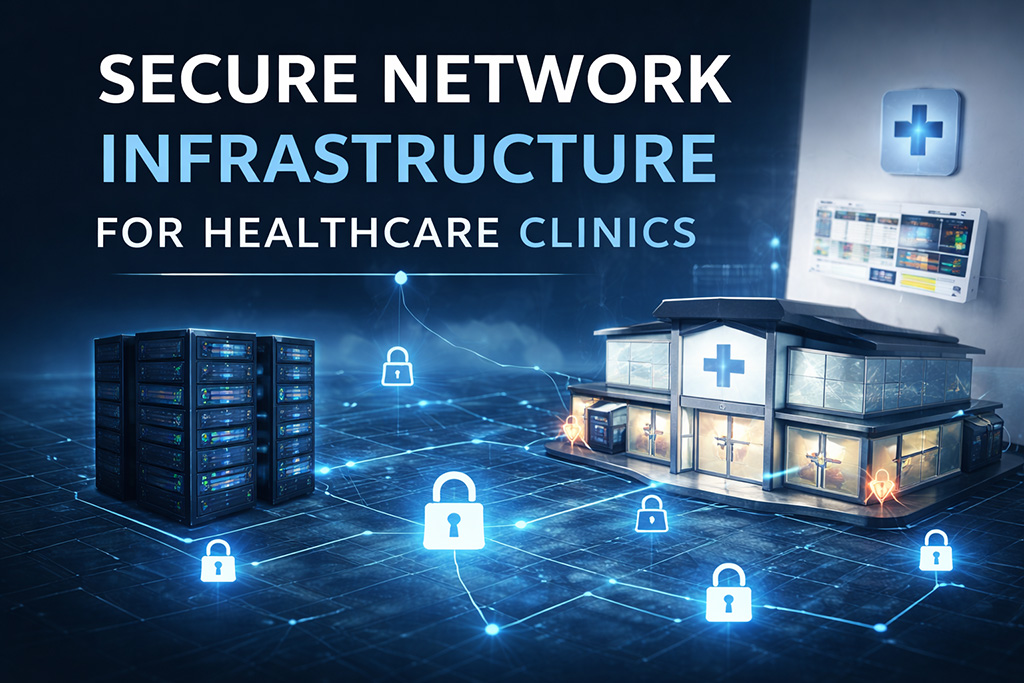
- Medical Device Network Segmentation: Isolating connected medical diagnostic and IoT equipment from general office networks to prevent lateral movement by malicious actors.
Pillar II: Identity & Access Governance
With clinical staff accessing systems remotely, on mobile devices, and across multiple workstations, managing digital identity is paramount. Pillar II enforces strict access controls while maintaining clinician efficiency.
- Multi-Factor Authentication (MFA) Enforcement: Requiring robust, phishing-resistant verification for all staff accessing clinical systems, email, and administrative portals.
- Administrative Privilege Restriction: Limiting high-level system permissions strictly to authorized personnel, minimizing the blast radius of compromised credentials.
- Secure Remote Access Architecture: Implementing encrypted, zero-trust VPNs and secure tunnels for physicians accessing patient records outside the physical clinic.
- Identity Lifecycle Management: Instantly revoking or updating access rights when staff members transition roles or leave the organization.
Pillar III: Threat Detection & Containment
Modern cyber threats move faster than human response times. Pillar III deploys advanced, automated defense mechanisms designed to identify and neutralize threats before they compromise patient data.
- Endpoint Detection & Response (EDR): Replacing legacy antivirus with next-generation behavioral monitoring across all workstations, servers, and mobile endpoints.
- Continuous Security Monitoring: 24/7 oversight of network traffic and system logs to catch anomalies in real-time.
- Advanced Email Threat Protection: Filtering inbound communications to block sophisticated phishing campaigns, business email compromise, and malicious attachments targeting staff.
- Immutable Backup Protection: Safeguarding backup repositories against ransomware encryption, ensuring attackers cannot delete or alter recovery points.
Pillar IV: Risk & Compliance Alignment
Regulatory standards such as HIPAA, HITECH, and evolving cyber insurance mandates require ongoing documentation and verifiable security controls. Pillar IV bridges the gap between technical execution and compliance readiness.
- Formalized Risk Assessment Coordination: Conducting regular security risk assessments to identify vulnerabilities across physical, administrative, and technical safeguards.
- Control Validation Support: Providing documentation and technical evidence required for audits, payer requirements, and regulatory reviews.
- Cyber Insurance Alignment: Ensuring your technical controls match or exceed the stringent underwriting requirements demanded by modern cyber liability insurers.
- Incident Response Preparedness: Developing and testing clear, actionable incident response protocols so your team knows precisely who to call and what steps to take if an alert triggers.
Pillar V: Executive Governance & Strategic Oversight
Technology should empower your long-term business strategy, not create constant firefighting. Pillar V establishes ongoing executive-level partnership to align IT investments with your practice's growth goals.
- Quarterly Risk Reviews: Regular executive briefings outlining your security posture, risk mitigation progress, and emerging industry threats in plain English.
- Lifecycle & Capital Planning: Proactive hardware and software lifecycle management, eliminating sudden surprise expenditures through predictable budgeting.
- Vendor Oversight: Acting as your technical advocate when managing third-party medical software vendors, EHR providers, and telecommunications partners.
- Growth-Aligned IT Strategy: Designing scalable technology roadmaps that support new provider onboarding, multi-location expansions, and specialized service offerings.
How the Framework Is Applied in Your Practice
Implementing the Medical Practice Protection Framework™ is a collaborative, structured process designed to minimize disruption to your daily clinical schedule:
- Risk Snapshot: A brief, 10-minute discovery discussion and initial evaluation to assess your current security posture and identify immediate vulnerabilities. Learn more and request your evaluation on our Medical Practice Risk Snapshot page.
- Protection Roadmap: A comprehensive technical assessment and customized remediation plan that prioritizes critical gaps and outlines a clear path to full framework alignment.
- Ongoing Governance: Continuous monitoring, quarterly executive reviews, and proactive maintenance managed seamlessly by our engineering team.

Partnering with Elite IT for Long-Term Security
At Elite IT, we partner with healthcare organizations where technology functions as a strategic enabler of patient care: not merely an IT expense. Our team combines deep technical expertise with an unwavering commitment to plain-English communication, free of confusing technical jargon.
With an industry-leading average response time of 3.5 minutes and a no-risk service guarantee, we provide the stability, security, and responsiveness your practice deserves. You focus on delivering exceptional patient care; we ensure your digital foundation remains unbreakable.
Take the Next Step Toward Complete Practice Protection
Is your medical practice fully protected against modern cybersecurity threats and operational downtime?
Discover how the Medical Practice Protection Framework™ applies to your organization. Visit our Medical Practice Risk Snapshot page today to schedule a brief introductory discussion with our leadership team. Let's build a secure, resilient future for your practice together.